
Excavation That Manages Water Where It Falls
Pond Digging in Mount Dora for retention systems that prevent stormwater from flooding low areas during heavy rain events
Water pools in sections of properties across Mount Dora, Sorrento, Tavares, and surrounding areas after summer thunderstorms because the land lacks designated collection areas where runoff can be directed and held until it percolates into the soil or evaporates. Blue Skies Tractor Co. digs ponds designed to capture and retain stormwater, improving drainage across the property and eliminating standing water that makes parts of the land unusable for days after rain. The company evaluates land layout and natural water flow patterns to determine where ponds should be located and how large they need to be based on the acreage draining into them.
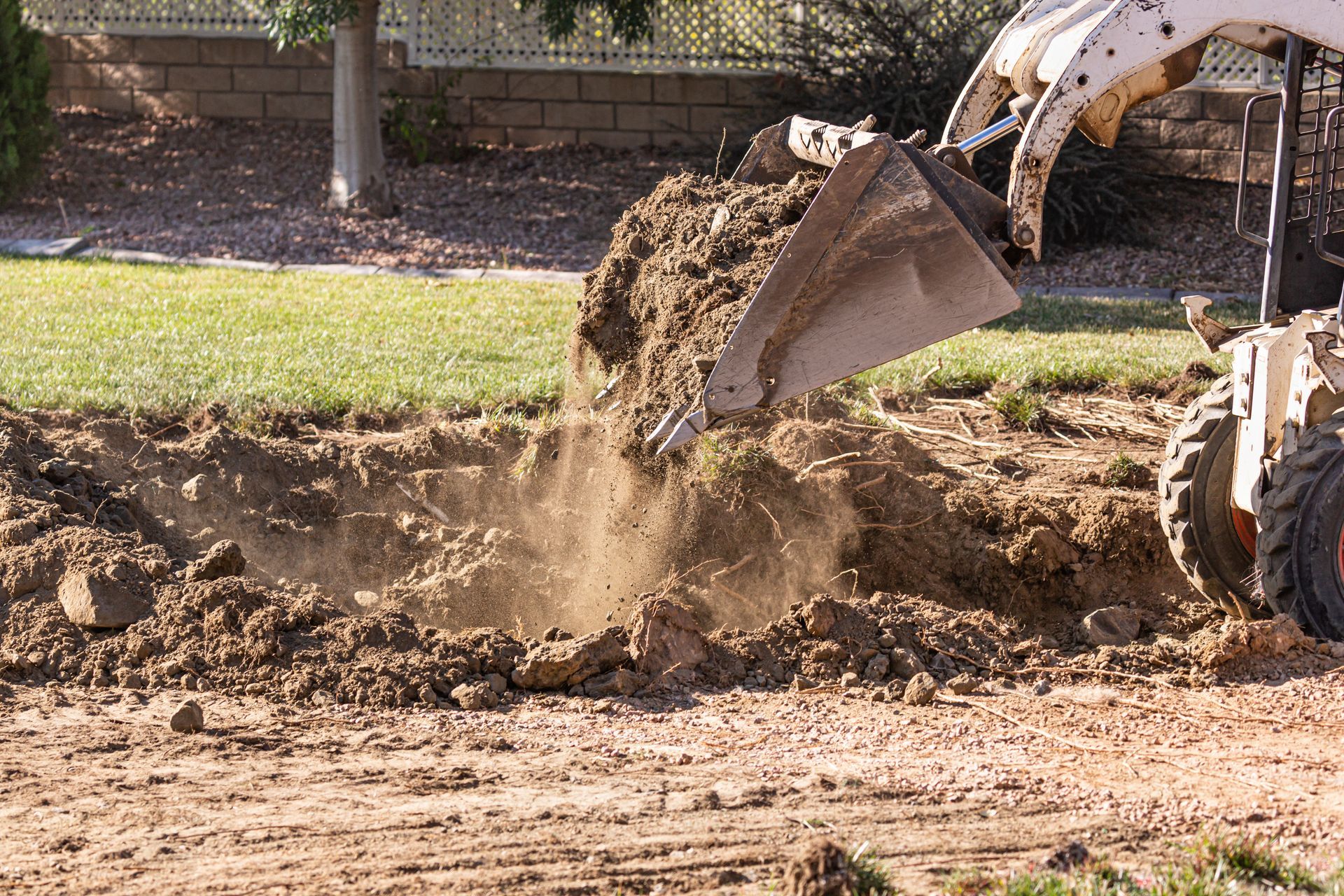
Pond digging involves excavating a basin to a specific depth and shaping side slopes so that soil remains stable and vegetation can establish along the banks without erosion. In Central Florida, sandy soils require gentler side slopes than clay-based soils because steeper angles lead to slumping and bank failure, especially during the first year after excavation when vegetation has not yet rooted deeply enough to hold the soil in place.
Arrange a site evaluation to walk the property and identify where water naturally flows so that pond location and size can be planned accordingly.
What Changes After Pond Excavation Completes
Properly designed ponds account for the volume of water that drains from surrounding land during typical rain events and how quickly that water needs to be held before it soaks into the ground or flows out through a control structure. Excavation depth is determined by how much storage capacity is required, and shaping includes creating shallow zones along edges where aquatic plants can establish and deeper zones in the center that hold water even during dry periods.
After the pond is dug and graded, property owners notice that water no longer stands in low areas after storms, runoff is directed into the retention basin instead of across driveways or near structures, and sections of the property that were previously too wet to use become accessible year-round. The land drains more predictably, and erosion caused by uncontrolled water flow is reduced.
Pond digging can be combined with grading work that directs surface water toward the basin through shallow swales or graded slopes, and the excavated soil can be used as fill in other areas of the property or spread to build up low spots that collect water. Ponds dug for retention purposes differ from decorative ponds in that the primary function is stormwater management rather than aesthetics, though both can be designed to support wildlife and vegetation.
Property owners planning pond projects often ask about design considerations, maintenance, and how excavation affects the rest of the land.
Common Questions About This Service
How is pond size determined for a specific property?
Pond size is based on the acreage draining into it, typical rainfall amounts, and how quickly water needs to be stored and released, with larger drainage areas requiring greater storage capacity to prevent overflow during heavy rain.
What depth is needed for a retention pond to function properly?
Depth varies based on soil percolation rates and storage requirements, but most retention ponds in Central Florida are excavated to depths between four and eight feet to provide adequate capacity while maintaining stable side slopes.
When should pond digging be scheduled relative to other land work?
Ponds are typically excavated after clearing is complete but before final grading, so that excavated material can be used strategically across the property and drainage patterns can be confirmed before the site is finished.
How does soil type in Mount Dora affect pond excavation and stability?
Sandy soils drain quickly but require gentler side slopes to prevent erosion and slumping, and the presence of clay layers below the surface can affect how well the pond holds water during dry periods.
What happens to the soil removed during pond digging?
Excavated material is typically spread across the property to fill low areas, build up berms, or raise sections of land that need better drainage, reducing the need to import fill from off-site sources.
Blue Skies Tractor Co. digs retention ponds and stormwater basins based on land conditions and drainage goals specific to each property. Contact the company at (407) 467-1502 to discuss pond design and schedule excavation work that addresses your stormwater management needs.