Digging That Follows Precise Depth Requirements
Excavation in Mount Dora for foundation footings, drainage trenches, utility installations, and land shaping
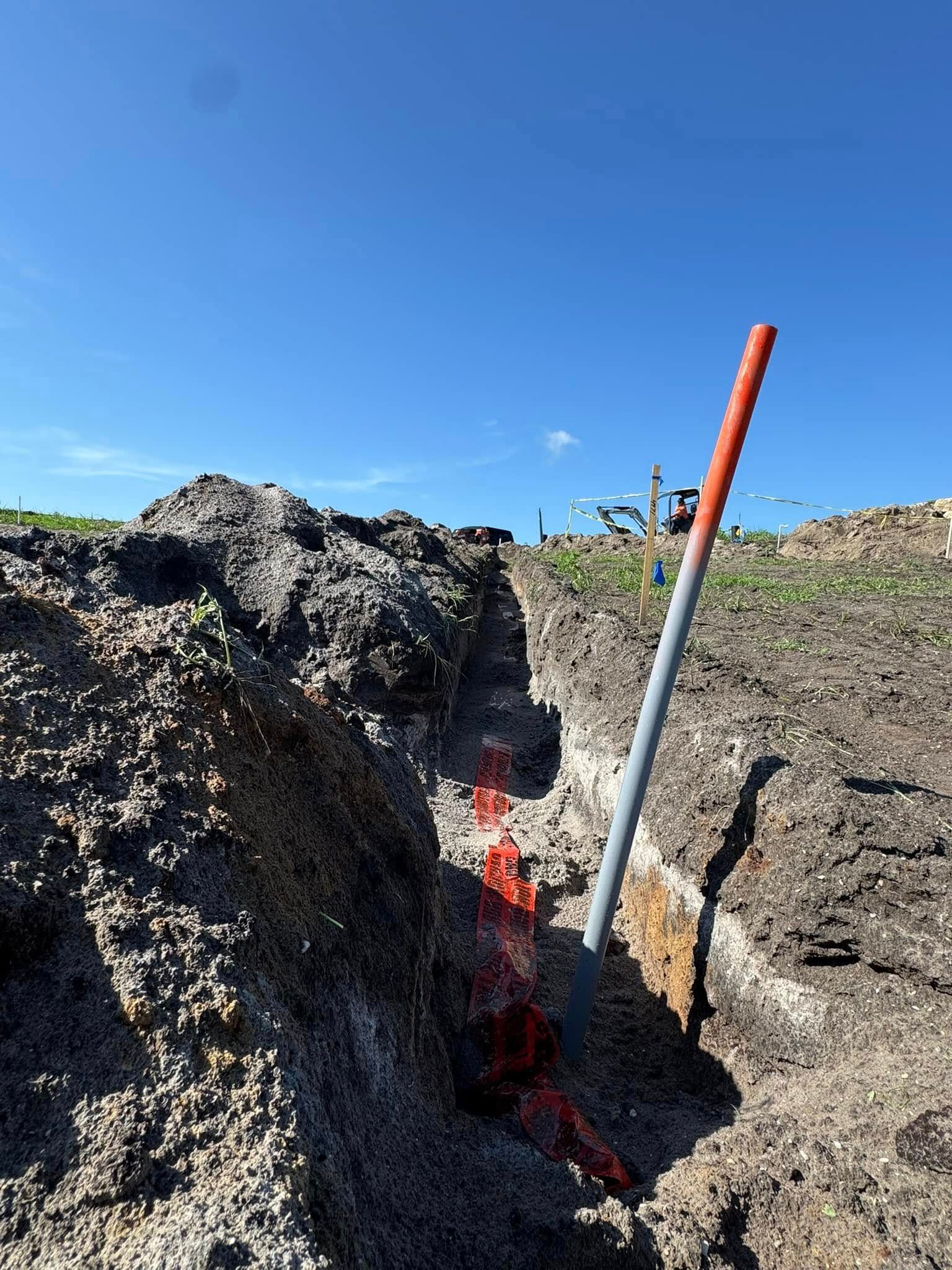
Sandy soils in Central Florida drain quickly but collapse easily without proper trench shoring, which affects how excavation work is sequenced and supported. Blue Skies Tractor Co. provides excavation services across Mount Dora, Sorrento, Leesburgh, and surrounding areas for residential and commercial projects, handling everything from shallow utility trenches to deep foundation cuts. The work involves removing soil to specified depths, maintaining stable trench walls, and grading excavated areas to match project plans.
Excavation precision determines whether foundations sit level, whether drainage systems slope correctly, and whether utility lines maintain required depth and separation. Equipment selection depends on project scale—compact machines access tight residential lots, while larger excavators move soil volume efficiently on open sites. Soil conditions dictate whether trenches require temporary shoring or whether native material can be reused as backfill.
Arrange a site consultation to review excavation depth, access constraints, and soil disposal or reuse options.
Why Soil Conditions Affect Excavation Approach
Florida's sandy soils excavate easily but don't hold vertical walls beyond shallow depths, which means trenches deeper than four feet typically require sloped walls or shoring to prevent collapse during installation work. Clay pockets or hardpan layers, when present, slow digging and may require different bucket configurations. Identifying soil type before excavation starts prevents equipment mismatches and scheduling delays.
Once excavation is complete, you'll see trenches or foundation cuts that match specified dimensions, with spoil piles staged for removal or redistribution depending on your project needs. The excavated area will be free of debris, with stable edges that allow safe access for concrete crews, utility installers, or drainage contractors.
Excavation services include site access grading, trench preparation, and rough grading for drainage, but final compaction and finish grading typically follow after backfilling or utility installation. The focus is controlled soil removal that meets engineering requirements and supports the next phase of construction.
Contractors and property owners planning excavation work often need clarity on how soil conditions and site constraints affect project execution.
Answers to Frequent Excavation Questions
What depth limitations exist for residential excavation?
Depth depends on soil stability and site access. Shallow trenches under three feet remain stable without support, while deeper cuts require sloped walls or trench boxes to meet safety standards.
How is excavated soil handled during the project?
Soil can be stockpiled on-site for backfill, redistributed for grading, or hauled off depending on project needs and available space. Sandy soils often work well as backfill after compaction.
What site conditions in Mount Dora complicate excavation?
High water tables during wet season, buried limestone shelves, and root systems from mature oaks can require modified approaches or additional equipment time beyond initial estimates.
How does excavation for drainage differ from foundation digging?
Drainage trenches follow specific slope requirements to move water, which means grades are checked continuously during digging. Foundation cuts prioritize level surfaces and precise depth control.
What preparation makes excavation more efficient?
Marking underground utilities, clearing surface vegetation, and confirming access routes for equipment reduces setup time and prevents delays once digging starts.
Blue Skies Tractor Co. adapts excavation methods to your site's soil conditions, project specifications, and access limitations. Request a project estimate that includes site evaluation and equipment recommendations based on excavation scope.